
RF Shielded Racks
DTI is the only UL Listed, 100% USA-made RF shielded rack and the lightest in the world at 375 lbs. Cheaper to ship, easier to install, and ready for immediate deployment the moment it arrives. TEMPEST certified, pre-tested, and TAA compliant, engineered for Defense, Classified Facilities, Intelligence, Aerospace, and Secure Infrastructure environments that demand verified electromagnetic containment and elite wireless isolation.
100% Made in USA (Sterling, VA)
Lightest RF Shielded Rack in the World
-100 dB Isolation
The only UL Listed Rack in the World
ROGUE RACK | SHROUD RACK
What Are RF Shielded Racks?
RF shielded racks are engineered enclosures designed to protect sensitive electronic systems by attenuating radio frequency (RF) energy across defined frequency ranges. They function as contained Faraday environments, preventing RF emissions from escaping and blocking external RF interference from entering.
These racks are used in mission-critical government, defense, and intelligence applications where signal integrity, electromagnetic security, and compliance are required.


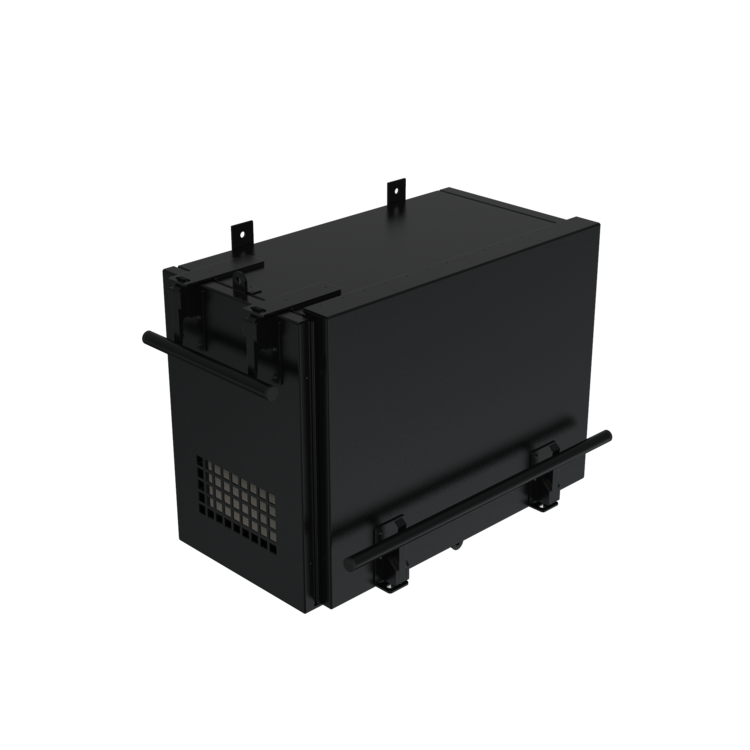
Defense & Intelligence Missions
WHY ARE RF SHIELDED RACKS CRITICAL FOR DEFENSE & INTELLIGENCE MISSIONS?
Modern defense systems operate in crowded electromagnetic environments where unshielded hardware is at constant risk of signal leakage and unauthorized interception. DTI’s RF shielded racks solve this by providing elite -100dB isolation, ensuring your classified data remains secure and mission-reliable. As the world’s only UL-Listed, 375 lb enclosure, our USA-made racks are the only global solution that is light enough for the tactical edge but strong enough for NSA-level security.“
RF shielded racks help ensure secure operation, data integrity, and mission reliability in classified and sensitive environments.
Why Choose Us
Why Choose Deployable Technologies for RF Shielded Racks
The only UL Listed, 100% USA-made RF shielded rack built for defense, Classified Facility, intelligence, aerospace, and secure infrastructure. Designed, engineered, and manufactured in Sterling, Virginia. TAA compliant, TEMPEST certified, and ready for immediate deployment.
- World’s Lightest 42U Rack: at 375 lbs. Lower shipping costs, two-person install, faster deployment.
- Only UL Listed Manufacturer: No site inspections. No compliance delays. Pre-approved for any cleared facility.
- TEMPEST Certified Out-of-Box: Individual serialized test report per unit. No field validation required.
- -90dB to -100dB Attenuation: from 100MHz to 10GHz. Meets and exceeds NSA 94-106.
- 100% Built in Sterling, VA: Fully TAA and Buy American Act compliant.
- Ships Mission Ready: Fully integrated at our Secure Integration Facility before shipment.
- Custom I/O, Filtering, and Power: At the top and bottom of the rack. Full attenuation integrity maintained.
- Built to Any Specification: Fixed and rapidly deployable architectures available.
- Theater-Scale Production: Rapid delivery of 20 or more units at the same certified quality.
Competitive Advantage Comparison Table
Why DTI is leading the market against all Competition
| Feature | DTI RF Shielded Racks | Leading Competitors |
|---|---|---|
| UL Listing | Official UL Listed | No / Site-Specific Only |
| Data Center Ready | Plug and Play — Pre-Approved | Requires Local Inspection |
| 100% Made in USA | 100% Built in Sterling, VA — TAA Compliant | Mixed / Foreign Components |
| Pre-Shipment Testing | Included — No Additional Cost | Paid Add-On |
| TEMPEST Compliance | Certified Out-of-Box | Requires Field Validation |
| Testing Report | Individual Serialized Report Per Unit | General Datasheet Only |
| Weight — 42U | 375 lbs | 1,000 to 2,000 lbs |
| Installation | Two-Person Install — No Specialized Crew | Specialized Team Required |
| Attenuation | -90dB to -100dB | Varies |
| Custom Configurations | Any Specification — Built to Mission | Limited Catalog Options |
| Scalability | 20 or More Units Rapidly Deployable | Limited Production Capacity |
How RF Shielding Works
How Does RF Shielding Work?
RF shielding works by attenuating electromagnetic fields through conductive materials and controlled enclosure design.
RF shielding reduces the transmission of:
Magnetic fields
Electric fields
Plane wave energy
Microwave emissions
Well-designed RF shielded racks limit RF propagation through:
Continuous conductive surfaces
Shielded seams and doors
Filtered power and data interfaces
Proper grounding and bonding
Shielded rooms are difficult to install, maintain, and move. These problems are often compounded by multiple remote locations. These shielded racks are easily re-purposed and feature low maintenance costs. Many racks are operational after 15-20 years of everyday use outlasting generations of equipment.
Types of Systems
What Types of Systems Use RF Shielded Racks?
RF shielded racks are used across a wide range of defense and government systems, including:
Secure communications systems
Intelligence processing platforms
Edge compute and mission systems
Cryptographic and key management devices
Tactical and deployable network equipment
Classified test and integration environments
Amphere Computing + RF Shielded Racks
How Ampere Altra processors power RF Shielded Racks at the edge?
In a tactical environment, the “Edge” is often a location with high heat, limited power, and zero physical security. Ampere Computing powers RF Shielded Racks by solving the three biggest technical hurdles of field-deployed intelligence:
1. Extreme SWaP Efficiency (Size, Weight, and Power)
Traditional processors (x86) generate massive amounts of heat and require heavy cooling systems. Ampere Altra processors use Arm-based architecture, which delivers high-core-count performance while drawing significantly less power.
The Benefit: Because the chips run cooler, the RF Shielded Rack doesn’t need massive, heavy HVAC units. This contributes to DTI’s ability to keep their 42U rack at a industry-leading 375 lbs.
2. Predictable Performance for IoBT
In the Internet of Battlefield Things (IoBT), data must be processed in real-time (AI inference, signal processing, or mesh networking).
The Technology: Unlike consumer chips that “throttle” (slow down) when they get hot, Ampere Altra provides predictable, deterministic performance.
The Benefit: This ensures that sensitive electronic signals inside a Shielded Rack are processed at a constant speed without the “noisy neighbor” interference common in multi-tenant cloud environments.
3. Dense Compute in a Secure Enclosure
DTI integrates these processors into TAA-compliant, USA-manufactured systems that fit perfectly into their shielded environments.
The Technology: With up to 128 cores per socket, you can fit a data-center’s worth of power into a single Rogue Rack.
The Benefit: It allows a forward-deployed unit to run complex AI and secure communications locally, rather than relying on a vulnerable “uplink” back to a home base.
Frequency Ranges
What Frequency Ranges Do RF Shielded Racks Protect?
Radio Frequency (RF) refers to electromagnetic energy within the frequency range of 3 kHz to 300 GHz. This spectrum supports communications, computing, sensing, and control systems used throughout defense and intelligence operations.
Since RF signals can unintentionally radiate or be intercepted, physical shielding is required to control how energy enters or exits mission systems.
Why Rack Level Shielding?
Modular, Scalable, and Future-Proof Cybersecurity
Why Choose Rack-Level RF Shielding?
Standard shielded rooms are permanent, costly, and difficult to maintain. Our RF shielded racks provide a flexible, high-performance alternative for protecting sensitive mission systems without the infrastructure overhead.
Seamless COTS Integration: Stop waiting for specialized TEMPEST-rated hardware. Our enclosures allow you to use Commercial Off-The-Shelf (COTS) equipment while maintaining elite-level signal emanation security.
Full Customization: Tailor your rack to your mission requirements with bespoke configurations for data I/O, power distribution, rack height, and custom finishes.
Long-Term ROI: While servers go obsolete in years, our racks are engineered for decades. With a 15–20 year operational lifespan, these enclosures outlast generations of hardware, making them a sustainable investment for remote and tactical sites.
Rapid Deployment: Unlike shielded rooms, these racks are transportable and easy to re-purpose, solving the logistical challenges of multiple remote locations.
Scale Real Device Testing
A customer desired to implement real device testing across the organization and provide access to key partners. The proprietary and secure nature of work disallowed the use of public real device testing services. The solution had to scale from lab use to datacenter use and support dense installations of mobile phones, tablets, and other smart devices.
The customer selected these RF shielded server racks to segregate wireless networks propagating inside the enclosure from ambient environment networks. The solution allowed them to populate a data center with multiple racks without interference or eavesdropping concerns.
Standards Conformance
RF shielded racks to meet global standards for SIGINT and emanation security.
USA NSTISSAM Level I
NSA 94-106
Canadian CID/09/15A Level I
MIL-STD-285
NATO SDIP-27 Level A (formerly AMSG 720B)
Custom Test Plans for Specific Shielding Applications
MIL-STD-461
NATO Zone 0
Specifications
Light
-90dB to -100dB Attenuation in Third-party Testing
Cooling for the Demanding Heat Loads
Transportable
Full Customization including Data, Power, Height, Color
Low Maintenance Cost
Individually Tested by Qualified Professionals
Ready to order your RF Shielded Racks ?
Lightweight. Certified. Mission-Ready. We’ve removed the complexity of RF shielding so you can focus on your data. Get a custom quote today for the only UL-listed racks built right here in Sterling, VA USA.
- Tactical Intelligence Hub
Frequently Asked Questions
What sizes are available?
- Rogue racks are 600mm wide
- 42U x 1100 deep is the most popular and under constant production
- 30U is popular for office environments where door frames might prohibit taller racks
- 18U is popular for smaller enclaves or as stacking SIPR/NIPR units (we call stacked units Keep)
- Custom sizes require an MOQ
What is the product weight?
A typical 42U Rogue is approximately 375 pounds.
What is the lead time?
- The lead time for small orders (1 to 5) of 42U Rogues is typically 6-8 weeks
- Larger orders are 12 weeks to first shipment (typically 5-10) with a shipment every week until complete
- Custom products are typically 16-20 weeks after design approval
What is the shielding performance or shielded effectiveness?
Rogue provides shielding from 100MHz to 10GHz. Common test frequencies for security include 1 GHz, 3 GHz, and 10 GHz. Common test frequencies for devices include 1900 MHz (cell network), 2450 MHz (WiFi), and 5332 MHz (WiFi). Rack has tested performance up to 18 GHz.
- We test every rack using IEEE 299 and NSA 94-106 as guidance for the test procedure. Kform tests at the required planewave frequencies.
- Baseline shielded effectiveness performance
1000 MHz
85dB
2450 MHz
85dB
5332 MHz
85dB
10000 MHz
90dB
- Rogue, Watchman, Shroud, and Keep are aluminum products and will not provide shielding in the magnetic range.
Custom test plans and attenuation available. Typical NSA 94-106 test frequencies include 100 MHz, 400 MHz, 1 GHz, and 10 GHz and require a minimum of 100dB during the test.
Are the racks EMP rated?
Our standard products are not intended for EMP protection. Depending on the frequency range, the rack can provide resistance to certain frequencies that characterize EMP. We build custom products and has past performance building EMP products.
How does the rack lock?
Racks have a hasp feature allowing the use of a padlock.
Although not recommended, we have done custom projects with X-09/X-10 locks and with electronic access control systems.
Who has tested the product?
Customers have fielded a version of these products for 30 years. The current product has been tested by Intertek, Washington Labs, and multiple customer accreditation groups.
Who uses shielded racks and enclosures?
Shielded racks are used by many US government organizations for emissions control. We cannot disclose government customer information, however prime contract information is publicly available showing racks purchased by
- Department of State
- Air Force
- FBI
Commercially, Hyperscalers widely use our racks to segregate wireless networks for real device testing. The large implementation by Google is public information.